Download

This is default featured post 1 title

Go to Blogger edit html and find these sentences.Now replace these sentences with your own descriptions.

This is default featured post 2 title

Go to Blogger edit html and find these sentences.Now replace these sentences with your own descriptions.

This is default featured post 3 title

Go to Blogger edit html and find these sentences.Now replace these sentences with your own descriptions.

This is default featured post 4 title

Go to Blogger edit html and find these sentences.Now replace these sentences with your own descriptions.

This is default featured post 5 title

Go to Blogger edit html and find these sentences.Now replace these sentences with your own descriptions.

Tampilkan postingan dengan label tips. Tampilkan semua postingan

Selasa, 18 Januari 2011

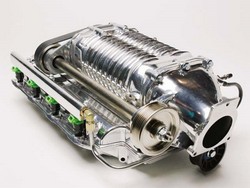
Supercharger, What is it?


supercharger is a device like turbo that works to improve the engine volumetric efficiency.
Where the volumetric efficiency indicates how much air and fuel mixture entering the combustion chamber. The more air and fuel mixture entering the combustion chamber, the combustion chamber bakarpun will be even greater. That will eventually power  be greater.

Selasa, 07 Desember 2010

TopTech Innovations in Automobiles / cars

Modern cars offer innovations that many of us would never have considered possible a few years ago. For example, 15 years ago, very few people were talking on cell phones, let alone dictating directions into their car’s navigation system by voice.

Technology is not the only answer to building better automobiles. Design and style also play a big role in the automobiles of today. But it is what drives the industry forward and makes our driving experiences more enjoyable, and often safer. Consider some of the latest technical advancements when choosing your next vehicle.
Hybrid Technology
By now, most of us are familiar with hybrid vehicles. The technology itself dates back to the late 19th century when it was first used in motorcycles, but hybrids didn’t really gain traction in the market until the Honda Insight and Toyota Prius turned eco into chic. To maximize fuel efficiency, hybrid vehicles employ two or more power sources. The Scuderi Air Hybrid engine, for example, uses a split cycle system to develop more power and increase efficiency. But it most commonly a combination of electric motor and an internal combustion engine.
Continuously Variable Transmissions
Fortunately, the advent of hybrid technology came about at nearly the same time as the continuously variable transmission (CVT), which helps maximize engine efficiency.

CVTs possess no gears, at least in the way we commonly refer to them. Most drivers understand shifting between first, second, third, and so one until we reach a maximum of six, seven, or even eight speeds in several of the more expensive vehicles. But CVT transmissions don’t use a clutch or a torque converter. Instead, they feature heavy-duty chains that progress through an infinite number of gear ratios.

The first CVT transmissions were generally quite good, but provided the sense of a tightly wound elastic band ready to break at any moment. As this technology continues to improve, so too does the feel and feedback it provides.

In some cases, such as the 2011 Suzuki Kizashi, paddle shifters on the steering wheel allow for the shifting of "gears," providing the driver with a sense of control and oneness often lacking in a CVT-equipped automobile.

Fuel economy can be dramatically improved with this type of transmission by allowing the engine to run at peak efficiency. In the future, it is conceivable that almost all vehicles will be equipped with CVTs, which generally provide a better alternative to shifting gears manually or with a standard automatic transmission.
Batteries

In the same way transmissions continue to improve, battery technology marches forward. Lighter, smaller, smarter, and faster are all words associated with the newest systems. Batteries are one of the biggest contributors to the overall weight of a vehicle. As new technologies are introduced, the benefits of an additional energy source easily overcome any negatives associated with the added mass.

To provide perspective on the amount of power today’s hybrid batteries develop, a typical AA battery distributes 1.6 volts. Normal voltage for the Highlander Hybrid battery pack is rated at 288 volts. Maximum power output is set at 45 kilowatts. Activating an EV switch located on the dash allows the vehicle to run solely on electric power for short periods of time. This is particularly useful when sitting in rush hour traffic, something most of face on a daily basis.
GPS Navigation

"The Road Not Taken" is a famous poem by Robert Frost. But more often than not it seems to apply to our use of current navigation technology. If only the navi system could think like a local and not always take such an indirect route to our destination.
Accident Avoidance
There are many times when we find ourselves multi-tasking while driving a vehicle. It goes without saying that we should not be talking on our cell phones or texting, but what about situations where you are looking one way to merge onto a highway and not necessarily giving your utmost attention the vehicle stopped in front. What if they don’t move and we accelerate thinking they have? The results could be catastrophic.

Volvo’s City Safety is designed to act as the secondary mind we all wish we had. At speeds up to 9 miles per hour, City Safety brings the vehicle to a rapid stop should it sense an impending collision. It momentarily assumes control, applying and holding brake pressure for a maximum of 1.5 seconds once the vehicle is safely stopped. City Safety will then start to slowly roll ahead as a way to remind the driver to apply the brakes.

A warning light flashes on the dash to acknowledge that City Safety has been employed and hopefully the driver is now fully aware and paying attention to the road ahead. City Safety does not take the place of good driving, which constitutes being aware of your surroundings at all times and braking when necessary. But it is a buffer to prevent the fender benders that can so easily cause other problems.

Minggu, 05 Desember 2010

Used Car Buying Tips

These Tips to Buy a Used Car Include:
Shop for newer used cars that still have at least a portion of their original manufacturer's warranty remaining: Most late model used cars have at least three-year/36,000 mile basic warranty coverage (and often longer "powertrain" coverage on the engine and transmission). This means you'll get at least a year or so of peace of mind if you buy a used car that is less than three years old. (Important: Be sure to confirm the used car warranty is fully transferable.)

Check into Certified, Pre-Owned (CPO) vehicles: These are late model used cars and trucks that typically have less than 50,000 miles and have been given multipoint inspections -- with any needed service or upkeep taken care of before the used car is put on the lot. CPO programs are backed by the automakers (Ford, GM, Volvo, etc.) and the vehicles often include a no-cost extended warranty on major parts such as the engine and transmission. CPO used cars are usually clean and well-maintained -- the "cream puffs" of the used car market.

Do a "background check" for indications that the particular used car make/model you are considering might be a problem car: One with an unusual record of either recalls or consumer complaints. You can find information about recalls and safety-related defects at the National Highway Traffic Safety Administration's Web site, and information about consumer satisfaction at JD Power & Associates. Consumer Reports is another good place to poke around. It's also a very good idea to do a simple Google or Yahoo! Web search; just type in the make and model of the vehicle and "lemon." You can bet if the car has a history of problems, there will be complaints all over the Internet.

Screen your candidate -- the specific used car you are looking at: Even if the make/model has a great reputation for quality and reliability, that particular used car may not have been well-maintained -- even abused. Have a third-party mechanic (not one working for the dealer) look the used car over as a condition of sale. If the dealer refuses to permit this, you should consider yourself well warned -- and walk away.
Ask to see the used cars' service records: If these are available, it's usually a good sign the car was well cared-for, and perhaps more importantly, proof (if the records are complete) that there weren't any unusual repairs or problems. If the used car records are not available, you should be suspicious. It doesn't necessarily mean the used car is a bad car, but you have to wonder why the seller would not have kept such a strong selling point as evidence of proper upkeep and maintenance. In such a case, it is doubly important to have a mechanic you trust give the used car a thorough once-over before you commit to buy.

Be sure it will pass both state safety and emissions tests (where applicable): In most states, this is a legal requirement, but don't assume it is. It can cost hundred of dollars (or more) to repair a used car that fails either state safety or vehicle emissions testing -- and in many cases, you can't legally register or drive that used car until it does pass.
Lastly, jot down the Vehicle Identification Number (VIN): located on a stamped plate on the top of the used cars dashboard and run a CARFAX Vehicle History Report to check for information that could impact your decision about a used vehicle. Some types of information that a CARFAX Report may include are title problems, accidents, ownership and service history. A CARFAX Report costs less than $30, and is well worth the expense.

Share

Twitter Delicious Facebook Digg Stumbleupon Favorites More